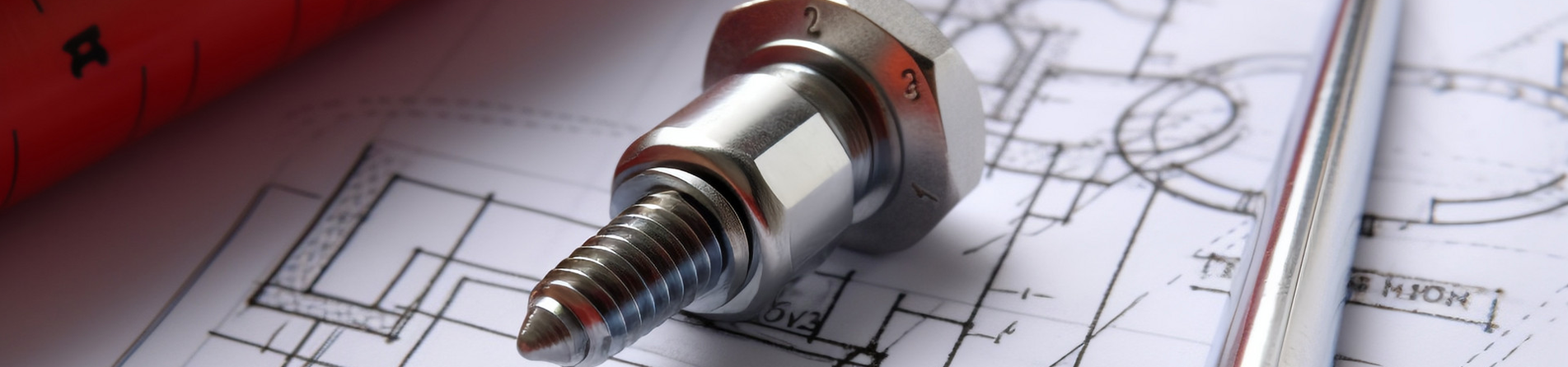
轴类零件的功用、结构特点轴类零件是机器中经常遇到的典型零件之一。它在机械中主要用于支承齿轮、带轮、凸轮以及连杆等传动件,以传递扭矩。按结构形式不同,轴可以分为阶梯轴、锥度心轴、光轴、空心轴、曲轴、凸轮轴、偏心轴、各种丝杠等。它主要用来支承传动零部件,传递扭矩和承受载荷。轴类零件是旋转体零件,其长度大于直径,一般由同心轴的外圆柱面、圆锥面、内孔和螺纹及相应的端面所组成。根据结构形状的不同,轴类零件可分为光轴、阶梯轴、空心轴和曲轴等。
轴的长径比小于5的称为短轴,大于20的称为细长轴,大多数轴介于两者之间。
1.1轴类零件的毛坯和材料
1.1.1轴类零件的毛坯轴类毛坯 常用圆棒料和锻件;大型轴或结构复杂的轴采用铸件。毛坯经过加热锻造后,可使金属内部纤维组织沿表面均匀分布,获得较高的抗拉、抗弯及抗扭强度。根据生产规模的不同,毛坯的锻造方式有自由锻和模锻两种。中小批生产多采用自由锻,大批大量生产时采用模锻。
1.1.2轴类零件的材料
轴类零件材料 常用45钢,精度较高的轴可选用40Cr、轴承钢GCr15、弹簧钢65Mn,也可选用球墨铸铁;对高速、重载的轴,选用20Mn2B、20Cr等低碳合金钢或38CrMoAl氮化钢。
45钢是轴类零件的常用材料,它价格便宜经过调质(或正火)后,可得到较好的切削性能,而且能获得较高的强度和韧性等综合机械性能,淬火后表面硬度可达45~52HRC。
40Cr等合金结构钢适用于中等精度而转速较高的轴类零件,这类钢经调质和淬火后,具有较好的综合机械性能。
轴承钢GCr15和弹簧钢65Mn,经调质和表面高频淬火后,表面硬度可达50~58HRC,并具有较高的耐疲劳性能和较好的耐磨性能,可制造较高精度的轴。
精密机床的主轴(例如磨床砂轮轴、坐标镗床主轴)可选用38CrMoAIA氮化钢。这种钢经调质和表面氮化后,不仅能获得很高的表面硬度,而且能保持较软的芯部,因此耐冲击韧性好。与渗碳淬火钢比较,它有热处理变形很小,硬度更高的特性。
Functions, structural characteristics of shaft parts Shaft parts are one of the typical parts often encountered in machines. It is mainly used in machinery to support gears, pulleys, cams and connecting rods and other transmission parts to transmit torque. According to the different structural forms, the shaft can be divided into stepped shafts, taper shafts, shafts, hollow shafts, crankshafts, camshafts, eccentric shafts, all kinds of screws and so on. It is mainly used to support the transmission parts, transfer torque and bear load. Shaft parts are rotating body parts, its length is greater than the diameter, generally by the concentric shaft of the outer cylindrical surface, conical surface, bore and thread and the corresponding end face of the composition. According to the different structural shapes, shaft parts can be divided into bare shafts, stepped shafts, hollow shafts and crankshafts.
Shaft length to diameter ratio of less than 5 is known as the short shaft, more than 20 is known as the slender shaft, most shafts between the two.
1.1 shaft parts of the blank and material
1.1.1 shaft parts blank shaft blanks commonly used round bar and forgings; large shafts or complex shaft structure using castings. After the blank is heated and forged, the internal fibre tissue of the metal can be evenly distributed along the surface to obtain high tensile, flexural and torsional strength. According to the different scale of production, the blank forging method has two kinds of free forging and die forging. Small and medium-sized batch production is mostly used free forging, large-scale production of large quantities when the use of die forging.
1.1.2 Material of shaft parts
Shaft parts materials Commonly used 45 steel, high precision shaft can be selected 40Cr, bearing steel GCr15, spring steel 65Mn, can also be selected ductile cast iron; for high-speed, heavy-duty shafts, the selection of 20Mn2B, 20Cr and other low-carbon alloy steel or 38CrMoAl nitrided steel.
45 steel is a commonly used material for shaft parts, it is cheap after tempering (or normalising), you can get a better cutting performance, and can get high strength and toughness and other comprehensive mechanical properties, quenched surface hardness of up to 45 ~ 52HRC.
40Cr and other alloy structural steel for medium precision and high speed shaft parts, this type of steel after tempering and quenching, has a good overall mechanical properties.
Bearing steel GCr15 and spring steel 65Mn, after tempering and surface high-frequency quenching, the surface hardness of up to 50 ~ 58HRC, and has a high fatigue resistance and good wear resistance, can be manufactured with high precision shaft.
Precision machine tool spindles (such as grinding wheel spindle, coordinate boring machine spindle) can choose 38CrMoAIA nitrided steel. This steel after tempering and surface nitriding, not only to obtain a high surface hardness, but also to maintain a softer core, so good impact toughness. Compared with carburised quenched steel, it has the characteristics of very small heat treatment deformation and higher hardness.
*** Translated with www.DeepL.com/Translator (free version) ***